Should Books Have Ratings?

shutterstock_139452749

Should books have guidance ratings?

After comments to a recent post I started thinking more seriously about this idea. This is a touchy subject as many have firm views on censorship and democracy in our freedom of choice in art. We continue to rate our films and electronic games, therefore shouldn’t we have guides on the content of a novel.

I know there have been times when I wish I were given a warning of content. I’m not a fan of graphic violence and particularly find rape scenes very disturbing. I have read many wonderful books that have scenes that make me put it back on the shelf; unfortunately once I have read it I can’t erase it from my mind.

I think this is why there is a growing trend in adults reading YA and the material becoming more explicit. A study last year found that 55% of YA (12-17 yr. old) fiction readers were over 18 and that 28% were aged 30 -44.

I read a YA novel where the 15 year old protagonist was a casual drug user and drank alcohol to excess with her friends, there were never any consequences to her actions and I would not be comfortable let my teen reading this. Was this content added because the publishers are aware of this growing shift in their YA audience?

Beth Yoke, executive director of the Young Adult Library Services Association, an offshoot of the American Library Association says”Books can be a safe way for young people to explore edgier, sensitive, or complicated topics, and they provide parents the opportunity to help their teens grow and understand these kinds of sensitive issues,” and. “ALA’s interpretation on any rating system for books is that it’s censorship.”

There is some merit to the associations comment, yet I feel that there is a difference in the quality of the vast amount of material on offer in the YA market. The book I mentioned above is popular fiction and in no way does it have literary merit exploring in-depth teenage issues with skill and talent.

Beside the contentious issue of censorship the obvious dilemma for a book rating system is practicality. Who would be responsible for this task? In films it is an independent body, which adheres to strict guidelines. The shear volume of books produced would make this impossible, so does the responsibility fall on the publishers or the individual for self –published novels. In the U.S there is a voluntary rating system available to the author, but most fear damage to sales if they add this. Shouldn’t information over profit be more important?

As you may have guessed I’d welcome a guideline that informs me if a novel contains, Drug use, offensive language, sex scenes etc.

The choice is still the consumers; it just empowers them to make a choice more suitable to their needs.
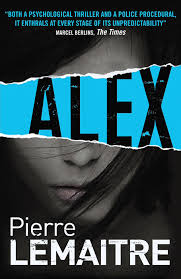
Alex by Pierre Lemaitre

Alex

One of the fastest moving trends in the YA genre is the crime novel. John Grisham, Harlan Coben and James Patterson, usually write adult crime, are all producing novels aimed at a younger audience. Next week I will review Harlan Coben Shelter, but first, I thought I should indulge in an adult crime novel so I can compare the two. I chose Pierre Lemaitre’s Alex, it was translated into English and re-published last year, and since that time it has received a lot of praise and won the CWA’s International Dagger award for 2013, so I thought it was a good choice.

The first thing I will say about this novel is don’t read anyone else’s review. This might sound arrogant, but I’m giving this warning for your own well being as many of the reviews reveal too much and I found this tainted any mystery the plot may have held. Most of the reviewers have done this inadvertently, but my readers are an intelligent bunch and I know they can read between the lines.

With that in mind, I will give you a very brief plot blurb. The setting is France (mainly Paris), a girl is kidnapped and the police try to solve this and other evolving mysteries- there. I want to mention a couple of things that bugged me about the novel, I don’t usually do this as opinions can be subjective, but I have an uncontrollable compulsion today to put it out there.

First – the cop, he is the stereotype, white, middle aged, pig headed, flawed character we’ve seen time and again in many crime novels. This is a shame as Lemaitre has a talent for characterization. Secondly- the title, it really “had my goat up” as my mother would say. It did the crime genre, which is unpredictable by nature, no justice.

Now for the good- what I love about the novel is Lemaitre’s keen observations on human nature. He manages to create characters that are incredibly believable. His writing pulls out the subtleties and nuances of the everyday, that most of us are unaware. Lemaitre’s talent is in the detail. I’m not talking of the kind of detail that can bore you to tears, I once read a book that described a fob watch for eleven pages, it’s the kind of detail that forms clear pictures in your mind and allows the story to move along seamlessly. It is that talent that leaves me wondering whether Lemaitre should write in a different genre especially literary fiction.

NB: He did win the Prix Goncourt award for an epic novel Au revoir là-haut on WWII; the highest award for literary fiction in France.

In the end I recommend the book for adults who enjoy this genre, as it was enjoyable. I also recommend it to budding writers, as there is much to be learnt from his style, and its what I found to be the most enjoyable part.


Title: Alex

 Author: Pierre Lemaitre

 Published: French 2011, English 2013 Maclehose

 Genre: Crime

Jane Austen Revamp

sense and sensibility north hanger abbey

Should a classic novel be reinvented? This question is nothing new, but neither is the concept. For centuries stories have been retold, reworked, and presented in different forms. Many of Shakespeare’s plays have origins in Greek mythology and folklore and verbal storytelling. The constantly evolving fairytale genre is another example of this.

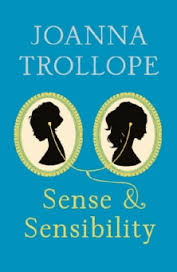
When I heard that six of novels of Jane Austen were going to be rewritten in a contemporary format I was wary, but only in the “Don’t fix what ain’t broke “ context. The Austen Project pairs six bestselling contemporary authors with Jane Austen’s six complete works: Sense & Sensibility, Northanger Abbey, Pride & Prejudice, Emma, Persuasion and Mansfield Park.

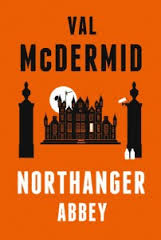
Sense and Sensibility has been rewritten by Joanna Trollope and was released on October 2013; Northanger Abbey was rewritten by Val McDermind and was released on March 2014. Curtis Sittenfeld is working on Pride and Prejudice, which will be released in a few months and Alexander Mccall Smith is penning Emma. No news on the other two novels, as of yet. Hint, hint, I’m available.

Jane Austen is one of the most popular writers in the English language and if she wrote today she would be labelled under the chic-lit romance genre. Her books were published between 1811 and 1815 and have been widely read ever since. So should they be tampered with?

I have heard authors talk on this subject and many are of the opinion that it keeps the stories alive. I believe the only opinion that matters, is the authors, as it is their work. This is obviously difficult, as in this case, when the author is deceased. But a good story is a good story, and I can’t form a valid opinion until I’ve actually read one.

The reviews are generally good, and I’m thinking I will dip my toes in the water. I might start with Emma, when it is released, as it is one of my favourites and Alexander Mccall Smith is such a witty, Wildean (Oscar) writer, that I’m sure he’ll capture the Austen spirit to a hilarious tee. Or maybe I’ll start with Pride and Prejudice; I feel Curtis Sittenfeld is an excellent choice for this novel. Sittenfeld really knows how to get into the mind of a young adolescent girl with all her turmoil; she displayed this in Prep (loved this novel). But…. After reading J.K Rowling’s review of Northanger Abbey maybe I should start there.


‘Val McDermid’s brilliant re-working of Jane Austen’s original shows that innocent, bookish girls in thrall to the supernatural have changed surprisingly little in two centuries. Witty and shrewd, full of romance and skulduggery – I loved it.’
J.K. ROWLING


And…..


‘I picked up Northanger Abbey one evening and didn’t stop reading until I’d finished it. It’s an exquisitely realised tale of the uncertainty and brutality of teenage years told with the lightness of touch and humour that Val is famous for. Utter brilliance from McDermid’ SUSAN CALMAN


I’m going straight to The Book Depository to order my copy. Any suggestions, besides moi, for who should write Persuasion or Mansfield Park?


Digital Storytelling

shutterstock_109088609

Today releasing a book is no simple path, there is a labyrinth of avenues one can take, and at the rate technology is evolving, there is no doubt, in ten years the publishing world will be very different from today. This was evident when I went to a talk on Digital Storytelling. This is a rapidly growing area, and Cordelia Funke, author of the “Inkheart” series, gave us an incredible insight into her developments into this field. She told, how out of frustrations with the 90min representations of her books in the movie world, she decided to develop an app called Mirrorworld .
Funke described it as a “Jumpstart to the imagination”. It starts with a mirror that you enter and you discover the Inkheart world. Funke describes the app as a “breathing book, it’s a visual travel guide to my world. If you want to see what a plant looks like you can see through illustrations, it’s accompanied by a soundtrack or you can listen to my voice telling the story”
This app was truly amazing, and the illustrations were beautiful. It’s retailing for 5.99 which some say is pricey for an app, but this is more than a visual book and it is cheaper than most books, by bestselling authors.You can have a look at the app through this link http://www.mirrorworldnovels.com/

The other guest, was Connor O’Brien the co-director of the Digital Writers’ Festival (digitalwritersfestival.com) He recently trialed a digital festival as part of  Melbourne’s Emerging Writers Festival.This was a huge success. People who can’t physically attend a festival, for reason varying from geographical, financial or disabilities, gained the most from the experience. The view expressed from attendees was that it was as good as being there in person, they felt present and embodied. This is obviously a growing field as I saw there is a digital Romance Writers festival on the 7th and 8th of June from Harper Impulse (Harper Collins Publishing). Have a look at the link for more details.http://www.romance-festival.com/
It was a very exciting talk and I wish I had a Tardis to see what the future world of publishing will really be like.

What do you think will happen?

The Tragedy Paper

The Tragedy Paper

The Tragedy Paper by Elizabeth LaBan
Let me first start by saying; I love the cover of this book. It’s the perfect summation of the novel.
Blurb
“Every year at an exclusive private boarding school in New York State, the graduating students uphold a historic tradition – they must swear an oath of secrecy and leave behind a “treasure” for each incoming senior. When Duncan Meade inherits the room and the secrets of Tim Macbeth, he uncovers evidence of a clandestine romance, and unravels the truth behind one of the biggest mysteries in the school’s history”

This is a simplistic summary, and it is a simple story, but it has rich characters and a captivating setting (who doesn’t love a boarding school setting). The main character, Tim, is an Albino, LaBan uses this to emphasize the teenage struggles of ‘do I, don’t I, fit in’. I don’t feel Laban was exploitative or insensitive, I feel she used this condition as an effective tool to express the feelings of many young people.
The “treasure” Tim leaves Duncan, is a set of audio CD’s telling his story of the previous year. Duncan discovers their lives are taking similar and often parallel paths. As Duncan plays the CD’s the story unfolds and we hear how Tim deals with his social inadequacies  at a new school, and as a teenager in love. Tim’s insecurity and self doubt ultimately leads to “the tragedy’. Duncan learns from Tim’s mistakes and discovers insight to himself and his own doubts are reassured through the therapeutic effect of Tim’s CD’s.

What I enjoyed most about the book, is the suspense that LaBan creates. The rhythm of the novel is like a ticking clock. The characters and the reader are hyper aware of time passing. This creates tension and a sense of urgency. We are left waiting for Tim’s words to reveal the secret, and wondering what the tragedy will be. As Duncan is continually drawn back to Tim’s CD’s, so are we. We are given clues throughout the book and can piece together a vague idea of the coming tragedy, but this, in no way, detracts from the book.

I really enjoyed this book, and LaBan’s writing. I found I was grabbing the book at every moment.

Published: 2013
Publisher: Corgi Books
Pages: 308