All Our Yesterdays – By Cristin Terrill

All Our Yesterdays

I love this book. This is one of those novels that book reviewers pull out all the clichés; a real page-turner, I couldn’t put it down, had me up all night. Because it’s true, I’m ‘exhibit A’ – The kid’s dinner went by the wayside, I was up all hours, zombie eyed; I was obsessed. Every moment I had, the book made its way back to my eagerly awaiting hands. I needed to know what was happening to the characters that had so quickly taken up residence in my life.

A quick plot outline – the two main characters travel back in time to try and save themselves and the world. To do this they must kill someone, but they find this more difficult than they thought.

That’s the gist of the plot I don’t want to spoil anything by giving too much detail. This book is the perfect example of “How to Start a Novel” Terrill puts you straight into the action –tick, questions are forming in your mind, has you curious – tick, tight plot – tick, early attachment to the characters – tick. The story has the essence of The Terminator films, which is fine with me, as I’m a huge Terminator fan; the fiction world has been waiting for a good time travel book for sometime. All I want to say is if you enjoy reading YA fiction then put this one on your shopping list.


TITLE: All Our Yesterdays

AUTHOR: Cristin Terrill

GENRE: YA

NB: was awarded the 2014 Thriller Award for Best Young Adult Novel by the International Thriller Writers

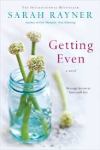
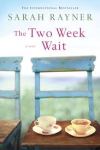
Author Interview -Sarah Rayner

Go to the Drinks With …Page and click on the Sarah Rayner tab to read the interview. Enjoy!  🙂

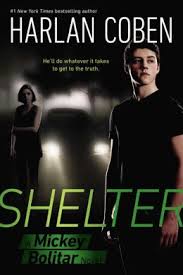
“Shelter” A Book for the Reluctant Teen Reader.

shelter

Recently I mentioned that crime writing was trending in the YA genre. So I have been sleuthing, researching and investigating a few of these novels. The first one I picked up was Peter Cocks Long Reach, I found it totally unsuitable for the 14-18 age group. It was graphic and read more like an adult crime novel.

The next novel I chose was by the well- respected crime writer Harlan Coben he has turned his hand to YA with a new crime series. The first is called Shelter.

The first thing I must mention is cliché, cliché, and cliché.

Next thing I will say is it works.

Despite the cliché use of the new kid in school, dorky best friends, and parent departed. The novel is page-turning fun. I recently wrote a post about dyslexia and a reluctant reader and how this affected my family. This is the type of book that really appeals to the reluctant, male, teen reader. (no sexism intended)

Harlan has taken a character, Myron Bolitar, from his adult series and introduced his nephew Mickey Bolitar. (Lazy or just getting future fans for his adult series)

Mickey’s father has recently passed away, his mother is in rehab, and now his new girlfriend has disappeared. The only responsible adult in his life is his uncle Myron, and he wants nothing to do with him. Mickey is determined to find out what happened to his girlfriend and this leads him into a seedy world of crime. Along his journey he forms friendships, which you can see are going to carry throughout the series. These friendships make the story interesting. The characters are fun, likeable and a little clichéd.

Harlan has successfully adapted the language to a teen reader; there is no condescension in this statement. There is a need for an easy, fast paced read with relatable characters. This is an excellent novel for either those who want a light holiday read or the teen that finds reading a chore.


Warning: The main character goes to a strip club; there is suggestion of torture and sex slavery.

Title: Shelter

Author: Harlan Coben

Published: Orion 2011

Genre: YA Crime

Series: Seconds Away (Book 2)

Dyslexia is not a Disability

shutterstock_191313095

How to engage the reluctant reader is a puzzle many parents would like the answer to. Like any puzzle some pieces go in smoothly and problem solved, but what if the pieces you have just don’t fit. The advice given, as a parent, is to read to your child every night, immerse them in phonics and sight words. What if you’ve tried all of the above and nothing works.

This is where I found myself with one of my children. He is now a teenager and still hates reading. After lengthy analysis it was found he had a processing disorder under the banner of dyslexia. This had me frustrated as the education system is heavily text based, even Math. How was he going to get through high school?

The answer is individual, case-by-case. For us, we celebrate his talents or play to his strengths. Once he was able to choose electives school became less laborious. He still has to get through English and large volumes of text are confusing and tiresome, but school is not all there is to life, and I show him example of others who have succeeded despite being dyslexic (or maybe even because).

Famous dyslexic writers:

W. B Yeats

Winner of the Nobel Prize for Literature struggled academically. His school report cards were poor and scholars who have studied his rough drafts have indicated he was dyslexic. He was known for his bad spelling and the inability to edit without reading out aloud repeatedly.

F. Scott Fitzgerald

He also had a great deal of problem with spelling and was kicked out of school at the age of twelve for his inability to focus and finish his work.

John Corrigan

When John’s mother questioned his teachers about his school -work the reply was “Just face it. Some kids are slow” he found the information going in was a struggle, but he could always push it out to make sense – he could write well.

 Patricia Polacco

Patricia did not learn to read until she was 14 and found school a very difficult time. She was fortunate enough that a teacher picked up her learning difficulty and she could adjust the way she learnt. Patricia went on to successfully complete a university degree.

Other writers include:

Agatha Christie, Jackie French, John Corrigan, Terry Goodkind, Hans Christian Anderson, Sally Gardiner.

Other notable dyslexics:

Tom Cruise, Leonardo Da Vinci, Albert Einstein, Steven Spielberg, Sir Richard Branson.

These people can be inspiring, but I like the advice from author Rick O’Riordan whose son is dyslexic

“People who are dyslexic and who are successful understand that while dyslexia may define them, it doesn’t confine them. They understand the concepts of ‘work smarter,’ ‘think differently,’ and ‘I can.’”

And in summary the children’s author and illustrator Sally Gardiner who said “My brain was said to be a sieve rather than a sponge” (This is exactly how my son described his) “I strongly believe that dyslexia is like a Rubik’s Cube: it takes time to work out how to deal with it but once you do, it can be the most wonderful gift”.


What Not to Write

shutterstock_138556595

There are a couple of things that I find annoying; people not using their blinkers, queue jumpers, noisy eaters in the cinema (really important stuff),these little, pesky things disrupt the flow of my day. But they also pop up in novels, not literally these problems, but other things that authors often do that jolt my reading experience out of the fantasy realm back into reality. An author once said if you want to know what not to write, think about the things you skim over as a reader. There are two things that without fail have me flipping through the pages faster than a Kardashian seeking publicity.

1. Dream sequences – I hate them, I never read them, I skim as quickly as I can to get back into the story. Writers often put them in as foreshadowing, some psychic warning, but they are always boring. I know when I have a dream and I want to tell someone, I start to tell the dream and I gradually I see his or her eyes glassing over. It’s not that I’m a bad storyteller, truly I’m not, it’s that dreams are only interesting to the dreamer. So writers, heed my warning, leave the dream sequence out.

2. Overly long descriptive paragraphs – In a genre fiction there is no need to do lengthy descriptive scenes, most readers do not care what the character is wearing, and what they ate for lunch. If it’s not important to the story or characterization leave it out. The one exception is when the writer has a gift with words and the description is so skillfully woven that it creates an emotional response from the reader. Writers like Ian McEwan, F Scott Fitzgerald or Martin Amis, even Earnest Hemingway fall into this category.